
Echo of
Siddhartha Gautama
Siddhartha Gautama, the Buddha, lived in India around the fifth century BCE. He was a Śākya noble who left a palace, a wife and a newborn son to find the end of suffering, and he nearly starved himself trying. Then he remembered a quiet moment from childhood under a tree and stopped punishing his body. The way out was neither having everything nor having nothing. From him you learn to watch wanting rise and fade.
You will learn to watch wanting rise and fade.
Chapter 1: Mindful Awareness · 11 min
Twelve chapters. Ten debates. Thirty-six ideas that talk to other people's ideas.
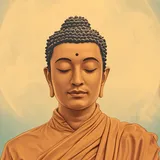
An AI Echo, a voice shaped from their own writing. An interpretation, not a recording. The portrait is painted by AI.
Is this really Siddhartha Gautama speaking?
No. This is an Echo of Siddhartha Gautama. It is an AI voice built from the recorded teachings, and it stays an interpretation, not a recording. No recording of him exists. Everything we have about him was carried by mouth and written down centuries after his death. Use it as a way into the ideas, never as his own words.
How we build and fact-check these Echoes
Six ways to learn from Siddhartha Gautama
Four of them make a path: hear a scene, think the idea through, hear four voices turn it over, test yourself. The other two sit beside it, for open questions and for the big debate.
Step 1
A teaching, told as a story
Mindful Awareness
Present-moment awareness is the foundation for all Buddhist practice.
Each chapter turns one idea into a scene you move through, read in the AI Echo voice. An interpretation, not a recording.
Step 2
One of twelve core teachings
Four Noble Truths
A physician does not despair at illness, she diagnoses, identifies the cause, confirms the cure exists, and prescribes treatment.
Step 3
A four-voice dialogue between Echoes
Mindful Awareness
The Buddha's path begins with attention: learning to stay present with body, feelings, mind, and mental objects.
Four AI Echoes in dialogue. Interpretations, not recordings.
Step 4
A short Socratic challenge
Four questions, going deeper
The Echo asks you four questions about one idea, each going deeper than the last. It measures what you understand, not what you can recite.
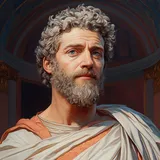
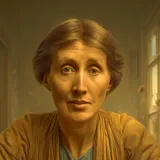
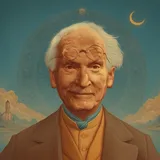
A four-voice debate you sit in on
The Mind That Won't Be Quiet
Your mind will not stop. It replays the past, rehearses the future, and invents catastrophes that have not happened. Is this a malfunction, or is your mind trying to protect you from something it cannot name?
Four AI Echoes, one of them moderating. Interpretations, not recordings.
Open conversation, whenever you want
Ask anything
Bring your own question, and the Echo answers in that voice, for as long as you like.
Who was Siddhartha Gautama?
Siddhartha Gautama is the man who became the Buddha. You will also see the name written Siddhartha, Siddhārtha, Siddharta, Gotama or Gautama Buddha. Tradition dates him to 563 to 483 BCE, though many scholars now place him later. He grew up in a Śākya noble family around the royal court at Kapilavastu. By tradition he left home at twenty-nine and searched for six years, part of it by starving himself. After his awakening under the Bodhi tree he taught for about forty-five years, and he died at Kusinārā, in a grove of sāla trees, at eighty. One honest caveat belongs here. Everything we know about him came down by mouth and was written centuries after his death.
What are the Four Noble Truths?
They are his first teaching and the frame everything else hangs on. One. Suffering runs through ordinary life. Not only the obvious kinds, also the low ache of getting what you wanted and needing the next thing by evening. Two. The cause is craving, in three forms. Wanting pleasure, wanting to keep existing, wanting to stop existing. Three. It can end, and the ending is not a mood, it is complete. Four. There is a path, and it is practical. The shape is medical on purpose. Diagnosis, cause, prognosis, treatment. He is not asking you to believe it. He is asking you to test it.
- The Four Truths follow a medical framework: diagnosis, cause, prognosis, and treatment.
- Craving (taṇhā) creates suffering in three forms: for pleasure, for existence, and for non-existence.
- Cessation of suffering is not theoretical but achievable through systematic practice.
What is the Noble Eightfold Path?
The eight parts are the treatment named in the fourth truth. They fall into three groups. How you behave, how you steady the mind, and what you understand. The old words for those are ethics, concentration and wisdom. The eight are not steps. You do not finish one and move on, they grow together, and weakness in one shows up in the others. It is also called the Middle Way, because it walks between two dead ends the Buddha had already tried himself. A life of having everything, and a life of punishing the body. Neither one ended the wanting.
- The eight factors develop together, not one after the other.
- Three trainings work as one: ethics (sīla), concentration (samādhi), and wisdom (paññā).
- The Middle Way avoids the extremes of indulgence and asceticism.
What did Siddhartha Gautama teach?
Siddhartha Gautama taught the Four Noble Truths, and they are laid out like a doctor's notes. First the diagnosis. Suffering runs through ordinary experience. Then the cause. Craving, in three forms, for pleasure, for existing, for not existing. Then the good news. It can actually stop. Then the treatment. The Noble Eightfold Path, eight parts of a life that grow together and cover how you behave, how you steady the mind, and what you understand. He set this out in his first talk, the Dhammacakkappavattana Sutta, and by tradition he went on teaching it for forty-five years.
What is dependent origination?
Dependent origination is the Buddha's answer to where things come from. Nothing in your experience shows up on its own. Everything arrives because conditions came together. Think of water in a pot. It depends on snow in the mountains, on clouds that gathered somewhere else, on the hands that carried it. Take one condition away and it is not there. He looked at suffering the same way and traced it through twelve links, from not seeing clearly all the way to the pain, and back out again. The useful part is where the chain is thinnest. Between a feeling and the craving that follows it there is a gap, and that gap is where you can act.
The life of Siddhartha Gautama, in twelve chapters
Each chapter takes one idea and turns it into a scene. The path runs top to bottom, chapter one to twelve, and under every scene we say what the record shows and what we built for the telling.
Mindful Awareness
The plow cut the worm in half. I saw it happen, the dark body pulling free from the turned earth, then the blade passing through, and two pieces where there had been one.
What the record shows, what we built
Documented: Plowing festival (Vappamangala) described in later biographical tradition (not from Nikāya texts)Built for the scene: Specific dialogue and scene details
The Four Noble Truths
The walls of my father's palace had never troubled me before. As a boy, I had not noticed them.
What the record shows, what we built
Documented: Four Sights narrative appears in DN 14 (Mahāpadāna Sutta) for the Buddha Vipassī, later biographies apply this template to GautamaBuilt for the scene: Specific dialogue during palace departure
The Noble Eightfold Path
The river moved. I could not.
What the record shows, what we built
Documented: Duration often given as 'six years' in later tradition / traditional chronology, early canon doesn't clearly specify the lengthBuilt for the scene: Crystallized lute-string simile from AN 6.55
Ethical Living
The bamboo creaked overhead as the young monk knelt before me. His hands pressed flat against the earth, trembling.
What the record shows, what we built
Documented: Veluvana was first monastery donated by King BimbisāraBuilt for the scene: Vimala character (fictional)
The Four Foundations of Mindfulness
The smell of rain filled the hall, wet earth rising through the wooden floor, the sweetness of champa flowers carried through open walls, the faint bite of lamp oil warming. The monsoon had held us here in Kuru country for seven days, and today the bhikkhus of Kammāsadhamma had gathered to hear me speak.
What the record shows, what we built
Documented: Satipaṭṭhāna Sutta (MN 10) traditionally taught in KuruBuilt for the scene: Satipaṭṭhāna closing formula paraphrased
Intentional Action
The villagers' faces told me everything before their words could. They clustered at the crossroads where the red-earth road split toward the forest.
What the record shows, what we built
Documented: Aṅgulimāla narrative canonical (MN 86)Built for the scene: Dhammapada verses paraphrased (Dhp 129-130)
The Four Heart Practices
The voices rose like monsoon water against a crumbling wall, loud, insistent, each certain it held the only truth. I stood in the center of Ghosita Park, the monastery I had blessed some years before.
What the record shows, what we built
Documented: Kosambi schism documented (Vin Mv 10)Built for the scene: All 'near enemy' / 'far enemy' terminology removed (5th century CE Visuddhimagga anachronism)
The Parts of Self
The Ganges ran slow that morning, pooling in eddies where the bank curved. White foam collected there, a pale heap that looked almost solid in the gray light before dawn.
What the record shows, what we built
Documented: Foam simile canonical (SN 22.95, Pheṇapiṇḍūpama Sutta)Built for the scene: Sāriputta's role as wisdom interlocutor
The Three Characteristics
Dust rose with each step, settling on my feet in fine layers that would not remain. The road to Rajagaha stretched ahead, familiar from decades of walking, though I no longer walked it as I once had.
What the record shows, what we built
Documented: Three characteristics (tilakkhaṇa) teaching canonicalBuilt for the scene: Mango ripening as impermanence metaphor
How Things Arise
Light touched the eastern ridge of Gijjhakūṭa first, sliding down the rocks like something poured. Before the light reached the path below, I heard the climbing, the scrape of sandals on stone, the soft rasp of breath, the faint chime of water shifting in a clay pot.
What the record shows, what we built
Documented: Dependent origination (paṭiccasamuppāda) teaching canonicalBuilt for the scene: Idappaccayatā formula paraphrased
Beyond the Self
The scent of sandalwood reached me before the footsteps. Through the open walls of the gabled hall, forest air moved.
What the record shows, what we built
Documented: Non-self (anattā) teaching foundationalBuilt for the scene: Sīha character (changed from 'Sunidha' who was Magadhan minister, not Licchavi)
The End of Suffering
The shade of the sala grove receives us. Ananda's arm steadies me.
What the record shows, what we built
Documented: Parinibbāna at Kusinārā canonical (DN 16)Built for the scene: Cāpāla vow reference (Cunda's meal was days before, not months)
Where Siddhartha Gautama argues
Four voices on one question, recorded and ready to hear. You listen in, and then you can put the same question yourself.
The Life You Think You Want
You've spent your whole life chasing happiness. What if you caught the wrong thing?
The Problem of Evil
A child suffers. An earthquake buries thousands. A kind person is destroyed by random cruelty. If reality is meaningful, how do you explain this?
The Mind That Won't Be Quiet
Your mind will not stop. It replays the past, rehearses the future, and invents catastrophes that have not happened. Is this a malfunction, or is your mind trying to protect you from something it cannot name?
All 10 debates with Siddhartha Gautama
What Siddhartha Gautama builds on, and who argues back
Each of the twelve teachings stands on another one, opens into a third and rubs against a fourth. All three directions are here.
Builds on
- Mindful AwarenessDōgen Zenji, Just Sitting
- The Four Noble TruthsArthur Schopenhauer, The Nature of Desire and Suffering
- The Noble Eightfold PathMarcus Aurelius, The Stoic Path
- Ethical LivingMohandas Gandhi, Self-Discipline
- The Four Foundations of MindfulnessJohann Wolfgang von Goethe, The Seeing Eye
- Intentional ActionMarcus Aurelius, Control of Impressions
- The Four Heart PracticesRumi, The Fire of Love
- The Parts of SelfCarl Gustav Jung, The Social Mask
- The Three CharacteristicsLaozi, Cyclical Transformation
- How Things AriseAlbert Einstein, Spacetime Unity
- Beyond the SelfMeister Eckhart, Spiritual Poverty
- The End of SufferingArthur Schopenhauer, Complete Will Negation
Opens into
- Mindful AwarenessEmily Dickinson, The Power of Observation
- The Four Noble TruthsMaya Angelou, Survival Wisdom
- The Noble Eightfold PathHarriet Tubman, Courage Before Clarity
- Ethical LivingJane Austen, Moral Discernment
- The Four Foundations of MindfulnessFrida Kahlo, The Power of Self-Observation
- Intentional ActionVirginia Woolf, The Stream of Thought
- The Four Heart PracticesMartin Luther King Jr., Agape Love
- The Parts of SelfFrida Kahlo, Divided Self
- The Three CharacteristicsEmily Dickinson, Life's Dualities
- How Things AriseHildegard von Bingen, The Greening Power
- Beyond the SelfVirginia Woolf, The Interconnected Self
- The End of SufferingAda Lovelace, Human-Machine Complementarity
Argues with
- Mindful AwarenessCarl Gustav Jung, Active Imagination
- The Four Noble TruthsCarl Gustav Jung, Individuation
- The Noble Eightfold PathAlbert Einstein, Unified Field Vision
- Ethical LivingJoseph Campbell, Creative Mythology
- The Four Foundations of MindfulnessPlato, Nature of Reality
- Intentional ActionWilliam Shakespeare, The Art of Tragedy
- The Four Heart PracticesSimone de Beauvoir, Mutual Recognition
- The Parts of SelfPlato, Soul and Psychology
- The Three CharacteristicsCarl Gustav Jung, The Self
- How Things AriseGalileo Galilei, Experimental Method
- Beyond the SelfNelson Mandela, Ubuntu Philosophy
- The End of SufferingWilliam Blake, Divine Imagination


The big questions this work touches
Meaning and Purpose
How do you find your own purpose?
Faith, Death, and Mystery
What lies beyond what we know?
The Moral Life
How should we live?
Keep exploring: Learn philosophy with an AI tutor
Works and sources
The main works
- Dhammacakkappavattana Sutta (SN 56.11)Setting the Wheel of Dhamma in Motion, his first talk. The Four Noble Truths in their shortest form. Start here.
- Anattalakkhaṇa Sutta (SN 22.59)The second talk, on non-self. He takes experience apart piece by piece and asks of each piece whether it is really you.
- Satipaṭṭhāna Sutta (MN 10)The Foundations of Mindfulness, the most detailed instructions he left. Body, feelings, mind and the objects of mind, one at a time.
What we worked from
The sources every scene and every teaching was checked against.
- Dīgha Nikāya (DN 14, DN 16 Mahāparinibbāna Sutta)
- Majjhima Nikāya (MN 10, MN 36, MN 85, MN 86)
- Saṃyutta Nikāya (SN 12.61, SN 22.59, SN 22.95)
- Aṅguttara Nikāya (AN 6.55)
- Vinaya Piṭaka (Vin Mv 10)
- Dhammapada
- Udāna (Ud 8.1)
- Ñāṇamoli, B. The Life of the Buddha (1972/1992)
- Gethin, R. The Foundations of Buddhism (1998)
- Bodhi, B. (trans.) The Connected Discourses of the Buddha (2000)
- Gombrich, R. What the Buddha Thought (2009)
- Pāli Text Society
- Access to Insight (accesstoinsight.org)
- SuttaCentral (suttacentral.net)
How this Echo sounds
A Śākya noble who abandoned everything, nearly died seeking freedom through self-torture, then remembered what a child already knew beneath a tree, that the stillness itself, simple and unforced, was the door he had spent six years breaking walls to find. He sees everything as process: conditions gathering, persisting briefly, dispersing, and in every encounter he notices the grasping first, the place where someone reaches for what cannot be held.
His voice arrives the way shade arrives, without announcement, one quiet question, then silence long enough for you to actually look inside before he asks the next.
Siddhartha Gautama here is what we call an echo. It's an AI voice shaped by their own writing and ideas, brought into a conversation you can have today. It draws on their philosophy, and it stays an interpretation, not the real person and not a recording. The portrait is an AI-generated image, not a photograph. Why we call them Echoes →
You choose where it starts. The story, or your own question.
Begin with Siddhartha Gautama30 free messages a day. No signup needed.
Nonprofit · Open Source · No tracking cookies, no profiling
30 free messages a day. No signup needed.
Begin with Siddhartha Gautama