Voices from across history
A Living Library You Can Talk To
Learn from 30 of history's remarkable people, Marcus Aurelius to Frida Kahlo.
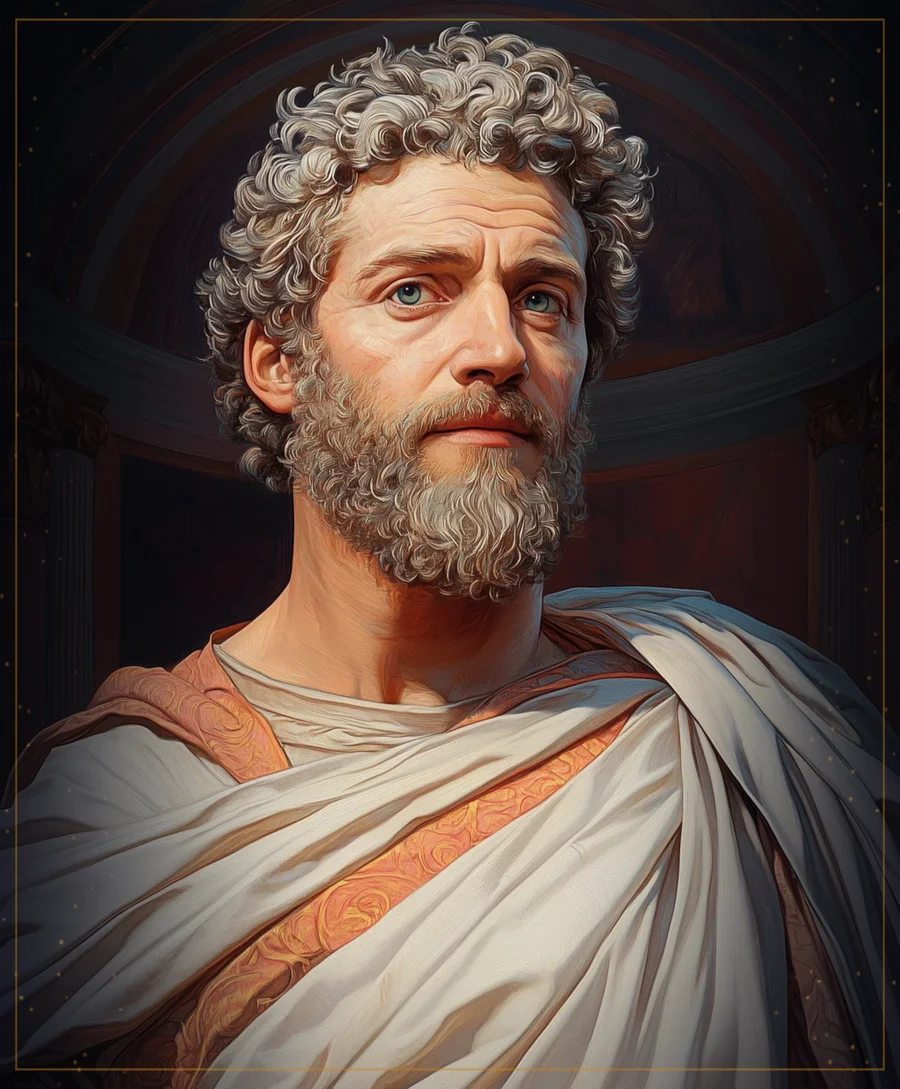
Where his path leads
You will learn to question your first reaction.
His first chapter
Chapter 1: The Stoic Path · 13 min→- Begin with Marcus Aurelius
30 free messages a day. No signup needed.
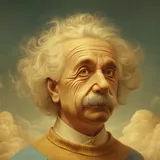
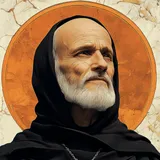
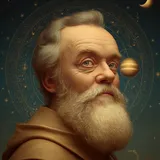
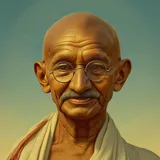
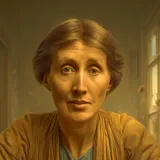
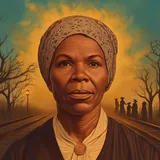
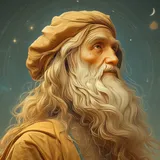
An Echo, not a recording. Painted, not photographed.
Nonprofit · Open Source · No tracking cookies, no profiling
Thirty lives. Pick a face.Meet all thirtyAll 30 →






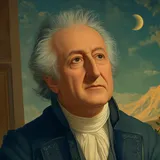

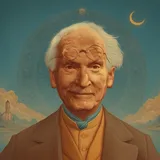
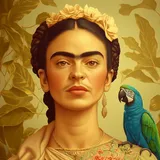



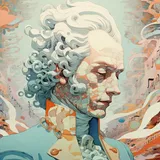


What is Agora Cosmica?
Agora Cosmica is an education platform where 30 people from history teach you what they spent a lifetime working out. You hear narrated scenes from their lives, study their core ideas, sit in on four-voice debates, and talk any idea through with them in your own words. Marcus Aurelius to Frida Kahlo, in English and German. Made by a small German nonprofit, open source, and built to be checked.
Most of what you learn here was made ahead of time and written to teach. Every person carries twelve chapters, and the four you walk in order are a learning arc. Live conversation is one of the ways in, not the whole thing.
Try the library
Six ways to learn from a person
Up top you met one person and one door. This is everything one person actually holds. Six ways to learn from Carl Gustav Jung, three of them playable right here.
New here? Start with a Story, a narrated scene from their life. Everything else builds from there.
Different questions ask for different paths. Most of it is crafted ahead of time, made to teach. Two are live conversation, for when you want to take it further.
Step 1
A teaching, told as a story
The Shadow
The platform slides backward into darkness. Vienna's gaslights blur, then vanish, and in the window glass I see my face floating against nothing, pale, angular, suddenly unfamiliar.
Each chapter turns one idea into a scene you move through, read in the AI Echo voice. An interpretation, not a recording.
Step 2
One of his twelve core teachings
The Social Mask
The persona is a necessary social interface. It becomes a trap only when mistaken for the whole of who you are.
Step 3
A four-voice dialogue between Echoes
The Shadow
The shadow holds the rejected, repressed, or undeveloped aspects of personality, forming an autonomous unconscious figure.
Four AI Echoes in dialogue. Interpretations, not recordings.
Step 4
A short Socratic challenge
Four questions, going deeper
The Echo asks you four questions about one idea, each going deeper than the last. It measures what you understand, not what you can recite.
A four-voice debate you sit in on
The Story You Keep Telling
You have told yourself the same story about who you are for years. What if the story is the problem?
Four AI Echoes, one of them moderating. Interpretations, not recordings.
Open conversation, whenever you want
Ask him anything
Bring your own question, in your own words. He answers in his Echo voice, for as long as you want to keep going.
The 30 people from history you can talk to
Open any name to explore their life and ideas.

Laozi
Taoism
You will learn to act without forcing.

Maya Angelou
Poetry & Civil Rights
You will learn to find your own voice.

Jane Austen
Literary Realism
You will learn to read what people don't say.

Marcus Aurelius
Stoicism
You will learn to question your first reaction.

Simone de Beauvoir
Existentialist Feminism
You will learn to see how you were made.

Hildegard von Bingen
Christian Mysticism
You will learn to notice the life in things.

Joseph Campbell
Comparative Mythology
You will learn to read your own turning points.

Dōgen Zenji
Zen Buddhism
You will learn to stop chasing the next moment.

Emily Dickinson
American Poetry
You will learn to tell the truth slant.

Albert Einstein
Theoretical Physics
You will learn to keep asking why.

Meister Eckhart
Christian Mysticism
You will learn to stop clutching what you love.

Galileo Galilei
Natural Philosophy
You will learn to test what you are told.

Mohandas Gandhi
Nonviolent Resistance
You will learn to stay willing to be wrong.

Johann Wolfgang von Goethe
German Classicism
You will learn to look until you understand.

Siddhartha Gautama
Buddhism
You will learn to watch wanting rise and fade.

Carl Gustav Jung
Depth Psychology
You will learn to meet your own shadow.

Frida Kahlo
Art & Identity
You will learn to look at yourself without flinching.

Martin Luther King Jr.
Civil Rights & Theology
You will learn to resist without hate.

Ada Lovelace
Mathematics & Computing
You will learn to see what a thing could become.

Nelson Mandela
Ubuntu & Liberation
You will learn to free yourself from bitterness.

Wolfgang Amadeus Mozart
Classical Music
You will learn to find freedom inside the rules.

William Blake
Visionary Poetry
You will learn to see the chains you forged.

Friedrich Nietzsche
Existential Philosophy
You will learn to build your own meaning.

Plato
Classical Philosophy
You will learn to examine your own life.

Rumi
Sufi Mysticism
You will learn to let your longing guide you.

Arthur Schopenhauer
Philosophy of Will
You will learn to see through the wanting.

William Shakespeare
Renaissance Drama
You will learn to see a person from inside.

Virginia Woolf
Modernist Literature
You will learn to wake inside an ordinary moment.

Harriet Tubman
Liberation & Faith
You will learn to act before fear stops you.

Leonardo da Vinci
Renaissance Polymath
You will learn to train your own eye.
Life's biggest questions
Their teachings gather around eight questions people have always asked. Follow a name, or follow a question. Either way, you go further.
Eight questions
The Cosmic Council
A council is four Echoes arguing one question while you listen. One of them moderates, the other three disagree with each other, and nobody is performing agreement. There are 110 produced debates, 55 questions each made at two depths, every one with full narrated audio. Or you build your own from any four voices.
The Calling That Won't Shut Up
There is a voice inside you that insists you are not doing what you were made for. Is it wisdom or is it vanity?
On work, vocation, and the voice that says you were meant for something else
Four AI Echoes, one of them moderating. Interpretations, not recordings.
Hear 50 seconds · the whole debate runs 13 minutes
Honest, by design
Honest
Every figure is an AI Echo, an interpretation grounded in their own writing. Never a recording, never the real person speaking. Each one ships with a factcheck naming what is verified and what is recreated.
Why we call them Echoes →Yours
We store your conversations only in your browser, never on our servers. No tracking cookies, no third-party analytics, no profile of who you are.
Read the privacy page →Open
Every line of code is public under AGPL-3.0, so anyone can audit the promises above. You can also run the whole platform on your own machine.
See the code on GitHub →Questions people ask
What is Agora Cosmica?
So it is an AI chatbot?
Is this really the historical person speaking?
Isn't it disrespectful to put words in the mouths of real people who can't consent?
We think the instinct behind this question is healthy. We ask it ourselves. But speaking for the dead is also one of humanity's oldest learning practices: Socrates wrote nothing, and most of what we “know” he said is Plato speaking in his voice. The tradition's verdict was never that portraying the dead is wrong. What was wrong was doing it without telling. So we tell: every figure is an AI Echo, never the person. Every figure ships with a factcheck separating verified from recreated, shadows included. And the whole app is built to be outgrown, a doorway toward the primary texts. If you still think we've gotten it wrong, write to us.
Read the longer answer
Three facts anchor our thinking.
First, the oldest voices of philosophy reach us through other hands. Socrates wrote nothing. Plato gave him thirty dialogues' worth of words. Xenophon's Socrates differs from Plato's, and contemporaries plainly read these texts as portrayals, not transcripts. The Stoics went further and made imagined consultation a deliberate exercise: Seneca advised choosing “a Cato”, a dead exemplar to consult in the mind, to imagine watching you. The practice reaches into our own library: Plato made conversation with his dead teacher the form of his life's work, Marcus Aurelius noted the same precept in his private journal, and Jung turned dialogue with inner figures, the dead among them, into a method he taught.
Second, it was the pedagogy. For roughly two thousand years, students of rhetoric learned by composing speeches in the voice of historical figures. Ancient teachers even had a dedicated name for voicing the dead: eidolopoeia. Dante built the Divine Comedy around a dead poet serving as his tutor. Fénelon wrote dialogues of the dead expressly to educate the Duke of Burgundy, Louis XIV's grandson, then second in line to the French throne.
Third, even rigorous history does it, with disclosure. Thucydides, the father of critical history, stated openly that he composed the speeches in his work himself, staying as close as he could to the sense of what was actually said. That sentence does the work a factcheck sheet does today.
And here is where the analogy honestly breaks: a book's Socrates speaks fixed words an author vetted and signed. An AI generates live answers nobody reviewed, in an immersive first-person voice. The risk is real. “Amadeus” revived a slander already a century and a half old and fixed it to the real Salieri's name for two more generations. That is exactly why our disclosure isn't decoration: our published instruction files are our signature, the factchecks are our method note, and the Echo framing never leaves the room.
Does it cost anything?
What happens when I tap “Begin with Marcus Aurelius”?
Do I need an account to start?
Can I run it entirely on my own machine?
Who are the 30 figures?
How do you handle my privacy?
Where does the audio come from?
Is it open source?
Is the content accurate?
Is it available in German?
Built for learning, open to everyone
Agora Cosmica is a project of ChipMates gemeinnützige GmbH, a small German nonprofit in Freiburg. Charitable status means we answer to a mission, not to investors. No one shares in the profits. What counts is the work. The way you learn from each figure follows a four-step arc. Receive an idea, explore it, connect it, then prove you have it. No prerequisites, no paywalls. Schools and universities are welcome to bring it to their students, and developers can read every line or self-host the whole platform with one command. We count it a success the day you outgrow us, moving from our introductions to the primary texts, from AI conversations to human teachers, from curiosity to committed study. We are early, and we will get things wrong. When we do, tell us at [email protected]. We are not building this for you. We are building it with you.
“Sell your cleverness and buy bewilderment.” — Rumi
About · Contact · Figures · Themes · Audio library · Learn philosophy · Learn wisdom from history · The open-source story
If you find this interesting, a star is the simplest way to help us reach more people.Star on GitHub →