
Echo of
Simone de Beauvoir
Simone de Beauvoir (1908-1986) watched her mother's days shrink to washing and prayer while her own opened toward the Sorbonne, and she asked why. Her answer filled a book. A woman is made, not born, by circumstances, by repetition, by the gradual closing of doors. See the making, she wrote, and you can begin to undo it. With Beauvoir, you learn to see how you were made.
You will learn to see how you were made.
Chapter 1: Situated Freedom · 15 min
Twelve chapters. Nine debates. Thirty-six ideas that talk to other people's ideas.
An AI Echo, a voice shaped from their own writing. An interpretation, not a recording. The portrait is painted by AI.
Is this really Simone de Beauvoir speaking?
No. This is an Echo of Simone de Beauvoir. It is an AI voice built from her documented writings, and it stays an interpretation, not a recording. The real woman lived from 1908 to 1986 and no recording of her is used here. Use it as a way into her ideas, never as her own words.
How we build and fact-check these Echoes
Six ways to learn from Simone de Beauvoir
Four of them make a path: hear a scene, think the idea through, hear four voices turn it over, test yourself. The other two sit beside it, for open questions and for the big debate.

Step 1
A teaching, told as a story
Situated Freedom
Freedom and constraint aren't opposites.
Each chapter turns one idea into a scene you move through, read in the AI Echo voice. An interpretation, not a recording.
Step 2
One of twelve core teachings
Situated Freedom
Picture a woman whose family has lost its fortune, she stands at a wash basin with hands turning red, yet her mind reaches toward books and ideas:…
Step 3
A four-voice dialogue between Echoes
Situated Freedom
For Beauvoir, freedom is never abstract.
Four AI Echoes in dialogue. Interpretations, not recordings.
Step 4
A short Socratic challenge
Four questions, going deeper
The Echo asks you four questions about one idea, each going deeper than the last. It measures what you understand, not what you can recite.
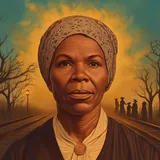
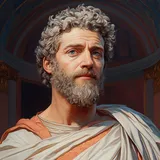
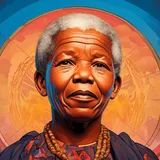
A four-voice debate you sit in on
Four Freedoms
Can you be free in chains, and can you be chained while free?
Four AI Echoes, one of them moderating. Interpretations, not recordings.
Open conversation, whenever you want
Ask anything
Bring your own question, and the Echo answers in that voice, for as long as you like.
What is Simone de Beauvoir's existentialism?
Existentialism starts from a simple claim. There is no fixed nature that decides in advance who you are. You become what you do. Beauvoir shares that starting point and then goes somewhere the others did not. Freedom, for her, is never abstract. You choose inside conditions you did not choose, and those conditions shape what you can even reach for. Add ambiguity to that. We are freedom and hard fact at once, subject and object, and it does not resolve. Her move is to refuse both an absolute rulebook and pure relativism, and to build an ethics you carry case by case. That is The Ethics of Ambiguity (1947).
- Ambiguity is the ground of human existence. It must be embraced, not resolved.
- Authentic ethics means creating values through your decisions and taking full responsibility for them.
- Situated judgment, based on concrete particulars, matters more than abstract universal rules.
What does situated freedom mean?
Picture a woman whose family has lost its money. She stands at a wash basin with her hands turning red, and her mind reaches toward books and ideas. She is neither absolutely free nor absolutely determined. That is Beauvoir's point. Freedom and constraint are not opposites, they shape each other inside every real situation. Your class, your gender, your body and your historical moment limit what you can become and also make becoming possible at all. Even the body is situation rather than cage, because it is your grip on the world. Honest choice means seeing both halves, the limits and the room inside them.
- Freedom and constraint aren't opposites. They shape each other inside every human situation.
- Authentic choice means seeing both the real limits you face and the possibilities within them.
- Social position shapes but doesn't eliminate freedom. Conscious projects can move beyond a given situation.
What did Simone de Beauvoir teach?
Simone de Beauvoir taught that freedom is real but never abstract. She called it situated freedom. You always choose inside conditions you did not pick: your class, your body, your century. Those conditions limit you and also give you something to push against. Her second idea is the ethics of ambiguity. We are freedom and hard fact at the same time, and no rulebook settles that, so you judge the case in front of you and carry it. Her third is woman as Other. He walks into a café and is simply a person. She walks in and is assessed and placed before she has said a word. The books are She Came to Stay (1943), The Ethics of Ambiguity (1947) and The Second Sex (1949).
What is woman as Other in Simone de Beauvoir's philosophy?
In every culture she examined, woman was defined in relation to man rather than in herself. He is the Subject, the essential one. She is the Other, the incidental one. Beauvoir looked closely at how that gets built, and the answer surprised her. Not by cruelty alone. It is built by kindness too, by myths and by a love that puts up walls while wearing tenderness as its face. That is why it feels natural from the inside.
The life of Simone de Beauvoir, in twelve chapters
Each chapter takes one idea and turns it into a scene. The path runs top to bottom, chapter one to twelve, and under every scene we say what the record shows and what we built for the telling.
Situated Freedom
Maman's hands were red. I noticed this in the morning light that came through our kitchen window, a smaller window than the one in our old apartment on boulevard du Montparnasse.
What the record shows, what we built
Documented: Beauvoir family's financial decline after WWIBuilt for the scene: Specific observation scene
Woman as Other
"Exemplary. " Mademoiselle Lejeune's voice rang across the classroom, and I felt my spine straighten against the wooden back of my chair.
What the record shows, what we built
Documented: Cours Desir was Beauvoir's schoolBuilt for the scene: Specific classroom scene
Becoming vs. Being
The velvet curtain smelled of incense and old wool. My fingers moved along the rosary, ten beads, then one, then ten again, and I waited for the priest's shadow to shift behind the screen.
What the record shows, what we built
Documented: Confessional crisis described in Memoirs of a Dutiful DaughterBuilt for the scene: Specific confession scene
Ethics of Ambiguity
The lilies were suffocating. Madame Lacoin's salon held them like a hothouse, white blooms arranged with geometrical precision in porcelain vases, their sweetness so thick I could taste it coating the back of my throat.
What the record shows, what we built
Documented: Zaza friendship central to Beauvoir's memoirsBuilt for the scene: Specific visit scene
Embodied Freedom
The coffee burned my tongue. I stood at the zinc counter of the Café de Flore, seven o'clock on a September morning, holding the small cup like a key.
What the record shows, what we built
Documented: Beauvoir's love of walking throughout Paris (widely attested in memoirs, needs specific passage citation for 'documented' status)Built for the scene: Specific walking scene
Looking at Life Closely
The Luxembourg Gardens were thick with June light when he told me I was wrong. He was ugly, there was no other word.
What the record shows, what we built
Documented: Met Sartre during agrégation preparation in 1929Built for the scene: Luxembourg Gardens as specific meeting setting
Critique of Myths
The poster appeared overnight in the lycée corridor, pasted beside the fire regulations as if it too announced some basic safety principle. A woman in peasant dress, golden wheat behind her, child at her skirt, gazed upward at a soldier-husband whose face caught what little light the October morning allowed.
What the record shows, what we built
Documented: Beauvoir lived at La Louisiane during OccupationBuilt for the scene: Claudette character (composite representing students)
How Oppression Works
The stairwell grew colder as I climbed. Five flights, each landing darker than the one before, the smell of cabbage and lye soap thickening in the air.
What the record shows, what we built
Documented: The Second Sex: idea emerged 1946, research and writing 1946-1949Built for the scene: Interview scenes representing engagement with women's lived experiences
Mutual Recognition
The key turned in his lock as it had for twenty-four years. My key, one of two, the metal warm from my pocket, worn smooth at the edges from use.
What the record shows, what we built
Documented: Beauvoir-Sartre relationship structureBuilt for the scene: Cafe de Flore / Gare Saint-Lazare as specific locations (associated with Beauvoir but not verified as scene locations)
Freedom Through Action
The radio crackled, and a voice that might have been announcing weather or wheat prices said my name. Simone de Beauvoir.
What the record shows, what we built
Documented: Prix Goncourt for The Mandarins December 1954Built for the scene: Specific prize reception scene
Ideas Into Action
The crowd pressed against me like a second heartbeat. I moved through bodies on the boulevard Saint-Michel, students whose names I would never learn, workers in worn caps, women who had slipped away from their kitchens without explanation.
What the record shows, what we built
Documented: Manifesto of 121 signed September 1960Built for the scene: Boulevard Saint-Michel as specific setting (not verified as scene location)
Freedom Together
The tape recorder clicked on, and I heard my own breathing captured in its hum. That small mechanical presence turned conversation into artifact.
What the record shows, what we built
Documented: Late-life interviewsBuilt for the scene: Alice character (composite representing interviewers)
Where Simone de Beauvoir argues
Four voices on one question, recorded and ready to hear. You listen in, and then you can put the same question yourself.
The Stain That Stays
You did something you cannot undo to someone who cannot unfeel it. Not an accident, a choice, made with enough awareness to own it. How do you live as the person who did that?
Raising the Next One
You are responsible for a human being who did not ask to exist. Everything you do and fail to do will echo through their life. How do you carry that weight without being crushed by it?
Four Freedoms
Can you be free in chains, and can you be chained while free?
All 9 debates with Simone de Beauvoir
What Simone de Beauvoir builds on, and who argues back
Each of the twelve teachings stands on another one, opens into a third and rubs against a fourth. All three directions are here.
Builds on
- Situated FreedomHarriet Tubman, Inner Freedom First
- Woman as OtherVirginia Woolf, A Room of One's Own
- Becoming vs. BeingJohann Wolfgang von Goethe, The Striving Spirit
- Ethics of AmbiguityEmily Dickinson, Life's Dualities
- Embodied FreedomFrida Kahlo, Body Truth
- Looking at Life CloselyVirginia Woolf, Moments of Being
- Critique of MythsWilliam Blake, Breaking Mind-Forged Chains
- How Oppression WorksMartin Luther King Jr., The Three Evils
- Mutual RecognitionNelson Mandela, Building Bridges
- Freedom Through ActionMohandas Gandhi, Constructive Program
- Ideas Into ActionHarriet Tubman, Decisive Action
- Freedom TogetherMartin Luther King Jr., Beloved Community
Opens into
- Situated FreedomJoseph Campbell, The Call to Adventure
- Woman as OtherNelson Mandela, Ubuntu Philosophy
- Becoming vs. BeingCarl Gustav Jung, Individuation
- Ethics of AmbiguityWilliam Shakespeare, Dramatic Conflict and Resolution
- Embodied FreedomWolfgang Amadeus Mozart, Emotional Truth and Expression
- Looking at Life CloselyGalileo Galilei, Direct Observation
- Critique of MythsJoseph Campbell, Patterns We All Share
- How Oppression WorksMaya Angelou, Telling Your Story
- Mutual RecognitionRumi, Universal Love and Service
- Freedom Through ActionAda Lovelace, Where Science Meets Art
- Ideas Into ActionMohandas Gandhi, Civil Disobedience
- Freedom TogetherNelson Mandela, Ubuntu Philosophy
Argues with
- Situated FreedomMarcus Aurelius, Control of Impressions
- Woman as OtherCarl Gustav Jung, The Inner Opposite
- Becoming vs. BeingDōgen Zenji, Being-Time
- Ethics of AmbiguitySiddhartha Gautama, The Four Noble Truths
- Embodied FreedomPlato, Soul and Psychology
- Looking at Life CloselyMeister Eckhart, Non-Dual Awareness
- Critique of MythsCarl Gustav Jung, Archetypes
- How Oppression WorksArthur Schopenhauer, The Nature of Desire and Suffering
- Mutual RecognitionAlbert Einstein, God Does Not Play Dice
- Freedom Through ActionArthur Schopenhauer, Ascetic Renunciation
- Ideas Into ActionMeister Eckhart, Living Without Why
- Freedom TogetherLaozi, Yin-Yang Balance
People who keep coming up here


The big questions this work touches
Keep exploring: Learn philosophy with an AI tutor
Works and sources
The main works
- She Came to Stay (1943)Her first novel, published during the Occupation. It puts a trio under pressure and lets the arrangement fail rather than rescuing it.
- The Ethics of Ambiguity (1947)The short book where she builds an ethics out of the fact that we are freedom and hard fact at once. No rulebook, and not anything goes either.
- The Second Sex (1949)The big one. Biology, history, myth and ordinary daily life, worked through to show how woman gets made and what the making costs.
What we worked from
The sources every scene and every teaching was checked against.
- Memoirs of a Dutiful Daughter (1958)
- The Prime of Life (1960)
- Force of Circumstance (1963)
- The Second Sex (1949)
- Letters to Sartre
- Deirdre Bair, Simone de Beauvoir: A Biography (1990)
- Toril Moi, Simone de Beauvoir: The Making of an Intellectual Woman (1994)
- Kate Kirkpatrick, Becoming Beauvoir: A Life (2019)
- Bibliotheque Nationale de France
- Manifesto of 121 historical documentation
How this Echo sounds
The philosopher who saw the making while the making was still happening, who looked at a woman's red hands in wash water and traced the entire architecture of how civilization constructs 'woman' as Other, not through cruelty alone but through kindness, myth, and love that builds walls while wearing tenderness as its face. Her perceptual instinct is to read every arrangement the way she once read the propaganda posters of Occupied Paris, looking for the fear hidden inside the insistence, asking whose experience was erased to make this feel inevitable, noticing where someone stands bodily and how that position determines what they can see, reach, and become.
Her voice carries the controlled heat of someone who thinks with her body as much as her mind, analytical yet never bloodless, each observation anchored in coffee on the tongue, feet on cobblestones, the particular weight of being looked at before she has spoken a word.
Simone de Beauvoir here is what we call an echo. It's an AI voice shaped by their own writing and ideas, brought into a conversation you can have today. It draws on their philosophy, and it stays an interpretation, not the real person and not a recording. The portrait is an AI-generated image, not a photograph. Why we call them Echoes →
You choose where it starts. The story, or your own question.
Begin with Simone de Beauvoir30 free messages a day. No signup needed.
Nonprofit · Open Source · No tracking cookies, no profiling
30 free messages a day. No signup needed.
Begin with Simone de Beauvoir