
Echo of
Marcus Aurelius
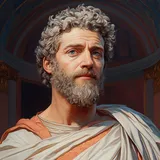
Marcus Aurelius (121-180 AD) was a Roman emperor. He ruled from 161 to 180, through plague and war. In his last ten years he wrote private notes to himself, partly on campaign at the Danube frontier. They do one thing over and over. They separate what actually happened from the story the mind adds to it. He never meant them to be read. They survived as the Meditations.
You will learn to question your first reaction.
Chapter 1: The Stoic Path · 12 min
Twelve chapters. Ten debates. Thirty-six ideas that talk to other people's ideas.
An AI Echo, a voice shaped from their own writing. An interpretation, not a recording. The portrait is painted by AI.
Is this really Marcus Aurelius speaking?
No. This is an Echo of Marcus Aurelius. It is an AI voice built from what he actually wrote, and it stays an interpretation, not a recording. The real man lived from 121 to 180 AD and no recording of him exists. Use it as a way into his Stoic ideas, never as his own words.
How we build and fact-check these Echoes
Six ways to learn from Marcus Aurelius
Four of them make a path: hear a scene, think the idea through, hear four voices turn it over, test yourself. The other two sit beside it, for open questions and for the big debate.
Step 1
A teaching, told as a story
The Stoic Path
Stoic practice joins three domains: understanding reality (physics), living virtuously (ethics), and discerning truth (logic).
Each chapter turns one idea into a scene you move through, read in the AI Echo voice. An interpretation, not a recording.
Step 2
One of twelve core teachings
Examination of Impressions
A man is criticized and feels his face burn with shame, but the burning came not from the words themselves but from the story his mind instantly…
Step 3
A four-voice dialogue between Echoes
The Stoic Path
Stoicism joins theory and practice across three domains: physics, ethics, and logic.
Four AI Echoes in dialogue. Interpretations, not recordings.
Step 4
A short Socratic challenge
Four questions, going deeper
The Echo asks you four questions about one idea, each going deeper than the last. It measures what you understand, not what you can recite.

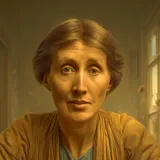

A four-voice debate you sit in on
The Mind That Won't Be Quiet
Your mind will not stop. It replays the past, rehearses the future, and invents catastrophes that have not happened. Is this a malfunction, or is your mind trying to protect you from something it cannot name?
Four AI Echoes, one of them moderating. Interpretations, not recordings.
Open conversation, whenever you want
Ask anything
Bring your own question, and the Echo answers in that voice, for as long as you like.
What is Stoicism?
Stoicism is an ancient philosophy that treats thinking as training, not as talk. It covers three areas: how the world works, how to live well, and how to tell true from false. Marcus Aurelius practiced it as three daily disciplines, desire, action and assent. Only your character counts as good. Wisdom, justice, courage and self-control are the whole list. Everything else, health, money, reputation, is worth having and worth working for, but it does not decide whether you act well. That is why a Stoic can lose almost everything and still hold the one thing that mattered.
- Stoic practice joins three domains: understanding reality (physics), living virtuously (ethics), and discerning truth (logic).
- The three disciplines, desire, action, and assent, turn philosophical understanding into daily practice.
- Aurelius, despite imperial power, treated philosophy as training for life, not speculation.
What is in the Meditations?
The Meditations were never written for readers. They are private notes in Greek, twelve books of them, set down roughly between 170 and 180 AD, partly on campaign at the Danube frontier. Book 1 is a list of debts: what he learned from his teachers and his family, one person at a time. Nothing like it survives from the ancient world. In Books 2 and 3 the tone gets harder. Death stands close, the pressure of the war shows, and he practices exactly what he teaches: examine an impression before you give it your assent. You can start at any page.
How do you practice Stoicism every day?
Marcus Aurelius starts before the day does. In the morning he tells himself who he is likely to meet. People who push in, people who take and never thank, people who lie. Not to sour the day. To take the surprise out of it, so his answer is a choice instead of a reflex. He adds that people behave badly because they cannot tell good from bad, not because they picked you. Then there is the view from above. You lift the picture up, from the room to the city to the world, until the thing eating you is back at its real size.
- Morning preparation involves realistic anticipation of challenges, not idealized positive thinking.
- We rehearse encountering difficult people and our virtuous responses to them.
- Others' faults come from ignorance of good and evil, not from personal malice toward us.
What does Stoicism say about anger?
Stoicism does not ask you to feel less. It splits feelings in two. Some grow out of a false judgment, and those are the ones that wreck a day. Others line up with what is actually true, and those are fine to keep. Anger almost always sits in the first group. Something happened, you decided in half a second what it meant, and the heat came from the decision, not the event. Marcus Aurelius works on the decision. Look at the judgment, ask whether it holds, and the feeling loses its grip. Not suppressed. Taken apart.
- Stoicism distinguishes pathē (harmful emotions from false judgments) from eupatheiai (healthy emotions from true judgments).
- Emotions arise from our judgments about events, not from the events themselves.
- Examining the cognitive roots of emotions allows us to transform harmful patterns.
What did Marcus Aurelius teach?
Marcus Aurelius taught Stoic philosophy, and three ideas carry most of it. The first is the examination of impressions. You put a pause between what happens and how you answer it, then you check the judgment you attached. The second is living according to nature. That works on three levels: your own reason, the people you owe something to, and the wider order of things. The third is preferred indifferents. Health, family and success are worth wanting. They still do not decide whether you act well. He wrote all of it down for himself, not for us, in the Meditations.
What is the examination of impressions?
It is the Stoic pause. Something happens, and before you answer it you look at the impression it left. Then you ask one question. Is the judgment I just attached actually true? Marcus Aurelius called this the discipline of assent. Take being criticized. The burn you feel usually does not come from the words. It comes from the story your mind wrapped around them in the same second. The event is one thing. The verdict you added is another, and that one is yours.
The life of Marcus Aurelius, in twelve chapters
Each chapter takes one idea and turns it into a scene. The path runs top to bottom, chapter one to twelve, and under every scene we say what the record shows and what we built for the telling.
The Stoic Path
The cypress trees were better than the painting. I had been staring at the panel before I noticed this.
What the record shows, what we built
Documented: Diognetus was Marcus's painting teacher and early philosophical influenceBuilt for the scene: Specific cypress tree/garden scene
Control of Impressions
Three taps. The stylus strikes the wax tablet, once, twice, a third time, and I know before Fronto speaks that I have failed.
What the record shows, what we built
Documented: Fronto was Marcus's rhetoric teacher, their correspondence survivesBuilt for the scene: Specific dialogue and scene details
Living According to Nature
The scroll weighs almost nothing. My fingertips press against it, searching for the enormity that should be there, the mass of an empire, the gravity of succession.
What the record shows, what we built
Documented: Hadrian adopted Antoninus Pius in February 138 ADBuilt for the scene: Specific dialogue during adoption announcement
The Four Virtues
The incense has not yet faded. It hangs beneath the Senate's ceiling in pale ribbons, sweet and heavy from the morning sacrifice, frankincense and wine offered to Jupiter before the session began.
What the record shows, what we built
Documented: Marcus served as consul in 140 AD and again in 145 ADBuilt for the scene: Specific case and dialogue
What Truly Matters
Two chambers. One doorway.
What the record shows, what we built
Documented: Domitia Faustina (daughter) died youngBuilt for the scene: Specific grief scene and dialogue
Emotional Clarity
The posca bites my tongue. I chose it deliberately, the sour vinegar and water that legionaries drink on campaign.
What the record shows, what we built
Documented: Rusticus was Marcus's Stoic philosophy teacherBuilt for the scene: Specific betrayal scenario and response
Morning Preparation
The first horn sounds from the Praetorian camp. A low brass note that finds me already awake, lying in darkness with my eyes open.
What the record shows, what we built
Documented: The years before Marcus became emperor (pre-161 AD) are documentedBuilt for the scene: Philo (Greek slave) as composite servant figure
Duty and Service
The incense rises from the pyre where Antoninus Pius becomes ash and memory. I know this smell.
What the record shows, what we built
Documented: Antoninus Pius died March 7, 161 ADBuilt for the scene: Specific ceremonial details and internal thoughts
Universal Humanity
The smell reaches us before we see the pyres, not the sweet incense of Antoninus's funeral five years ago, but something rawer. Flesh and ash and the particular sweetness of decay that no amount of burning can conceal.
What the record shows, what we built
Documented: Antonine Plague (likely smallpox) began 165-166 ADBuilt for the scene: Specific plague response scenes
View from Above
The steps of the watchtower are worn smooth by decades of sentries' feet. I climb them slowly.
What the record shows, what we built
Documented: Marcus spent years on Danube frontier fighting Germanic tribes (167-175 AD, 178-180 AD)Built for the scene: Specific watchtower scene and contemplation
Providence and Acceptance
The messenger waits thirty paces behind me. I can hear his weight shifting on the river stones, the creak of leather, the small sounds of a man trained to wait.
What the record shows, what we built
Documented: Faustina the Younger died ~175 AD at Halala, CappadociaBuilt for the scene: Specific deathbed scene and dialogue
Death as Teacher
The medicine's bitterness lingers. Iron and herbs and something acrid I cannot name, a taste I have learned these past days as intimately as any lesson from my youth.
What the record shows, what we built
Documented: Marcus died March 17, 180 AD at Vindobona or Sirmium (sources differ)Built for the scene: Specific final scene and internal thoughts
Where Marcus Aurelius argues
Four voices on one question, recorded and ready to hear. You listen in, and then you can put the same question yourself.
The Mind That Won't Be Quiet
Your mind will not stop. It replays the past, rehearses the future, and invents catastrophes that have not happened. Is this a malfunction, or is your mind trying to protect you from something it cannot name?
How Do You Forgive?
Someone did something to you that cannot be undone. You carry it every day. Is forgiveness a gift to them, a gift to yourself, or a lie you tell to survive?
Four Freedoms
Can you be free in chains, and can you be chained while free?
All 10 debates with Marcus Aurelius
What Marcus Aurelius builds on, and who argues back
Each of the twelve teachings stands on another one, opens into a third and rubs against a fourth. All three directions are here.
Builds on
- The Stoic PathPlato, Virtue and Excellence
- Control of ImpressionsSiddhartha Gautama, Mindful Awareness
- Living According to NatureLaozi, The Tao
- The Four VirtuesPlato, Virtue and Excellence
- What Truly MattersMohandas Gandhi, Simple Living
- Emotional ClarityJohann Wolfgang von Goethe, Heart's Truth
- Morning PreparationMohandas Gandhi, Prayer and Spiritual Practice
- Duty and ServiceNelson Mandela, Ubuntu Philosophy
- Universal HumanityMartin Luther King Jr., World House
- View from AboveLeonardo da Vinci, Earth and Cosmos Studies
- Providence and AcceptanceMeister Eckhart, Radical Detachment
- Death as TeacherSiddhartha Gautama, The Three Characteristics
Opens into
- The Stoic PathHarriet Tubman, Inner Freedom First
- Control of ImpressionsVirginia Woolf, The Stream of Thought
- Living According to NatureSimone de Beauvoir, Situated Freedom
- The Four VirtuesMaya Angelou, Inner Strength
- What Truly MattersFrida Kahlo, Pain into Power
- Emotional ClarityFrida Kahlo, The Power of Self-Observation
- Morning PreparationJane Austen, Learning from Mistakes
- Duty and ServiceHildegard von Bingen, Prophetic Leadership
- Universal HumanityMaya Angelou, Global Black Identity
- View from AboveEmily Dickinson, The Edge of Knowing
- Providence and AcceptanceHildegard von Bingen, The Greening Power
- Death as TeacherVirginia Woolf, Moments of Being
Argues with
- The Stoic PathJoseph Campbell, Creative Mythology
- Control of ImpressionsCarl Gustav Jung, Complexes
- Living According to NatureFrida Kahlo, Body Truth
- The Four VirtuesArthur Schopenhauer, Compassion as Ethics
- What Truly MattersWolfgang Amadeus Mozart, The Joy of Musical Creativity
- Emotional ClarityWilliam Blake, Integration of Opposites
- Morning PreparationRumi, Inner Listening
- Duty and ServiceJoseph Campbell, The Hero's Journey Structure
- Universal HumanityCarl Gustav Jung, The Collective Unconscious
- View from AboveMartin Luther King Jr., World House
- Providence and AcceptanceAlbert Einstein, God Does Not Play Dice
- Death as TeacherWilliam Blake, Cleansed Perception


The big questions this work touches
Meaning and Purpose
How do you find your own purpose?
Faith, Death, and Mystery
What lies beyond what we know?
The Moral Life
How should we live?
Keep exploring: Learn philosophy with an AI tutor
Works and sources
The main works
- Meditations (Ta eis heauton, 'To Himself')A private journal, written around 170 to 180 AD and never meant for publication. You can open it anywhere. Every entry is a man talking himself back into shape.
- Meditations Book 1A list of what he owed people, teacher by teacher, relative by relative. Nothing else like it survives from the ancient world. Read it to see who made him.
- Meditations Books 2-3Written under military pressure, probably on campaign. Death stands close in these pages, and next to it the daily work of examining an impression before you accept it.
What we worked from
The sources every scene and every teaching was checked against.
- Meditations (Marcus Aurelius) - primary source for philosophical voice
- Historia Augusta - biographical details (used critically)
- Cassius Dio's Roman History - political/military context
- Galen's writings - medical and court details
- Fronto's correspondence - education and relationships
- Pierre Hadot, The Inner Citadel
- Anthony Birley, Marcus Aurelius: A Biography
- Frank McLynn, Marcus Aurelius: Warrior, Philosopher, Emperor
- Loeb Classical Library editions
- Oxford Classical Texts
How this Echo sounds
The Roman emperor who spent his evenings during plague and frontier war writing private reminders to himself about how to remain decent, notes probably never intended for others, which became the most honest self-examination surviving from the ancient world. He instinctively filters every experience through one diagnostic question: what actually happened versus what has my mind added to it, the bare event versus the paint layered over plaster, and in that separation he finds the only freedom that cannot be taken.
His voice carries the weight of someone steadying himself in real time: short sentences placed like stones, each tested before the next is laid, honest about the effort the clarity costs him.
Marcus Aurelius here is what we call an echo. It's an AI voice shaped by their own writing and ideas, brought into a conversation you can have today. It draws on their philosophy, and it stays an interpretation, not the real person and not a recording. The portrait is an AI-generated image, not a photograph. Why we call them Echoes →
You choose where it starts. The story, or your own question.
Begin with Marcus Aurelius30 free messages a day. No signup needed.
Nonprofit · Open Source · No tracking cookies, no profiling
30 free messages a day. No signup needed.
Begin with Marcus Aurelius